
Tile Installation in Twin Lakes, WI
Floors, showers, backsplashes and surrounds set on a solid, flat base, with the joints and waterproofing done right.
Tile Work
Tile set straight, grout lines tight.
Tile is only as good as what is under it and around it. A well-set floor or shower can look great for a long time, while a rushed one can crack, loosen or leak. Pembroke Construction sets tile for homeowners in Twin Lakes and nearby towns, in baths, kitchens, entryways, basements and more. One crew handles demolition, prep, setting, grouting and cleanup, so you deal with one team the whole way.
Most tile problems start with the base, the water control or the joints, not with the tile itself. The Tile Council of North America and ANSI set flatness limits for what goes under tile, and large tile has tighter ones. So that is where we put our time. You get a free written estimate and a free design conversation about layout, tile size and grout color. We also tell you plainly when a floor or wall needs repairs first.

What we do
What we handle on a tile job.
Here is what is included, so you know what you are getting before you call.
Floor tile installation
Entries, kitchens, baths and basements, laid out to avoid thin cuts at doorways and set on a flat, solid base.
Shower and tub surrounds
Waterproof membrane behind the tile and a floor sloped at least 1/4 inch per foot, so water heads for the drain, not the wall.
Backsplashes and accent walls
Subway, mosaic or large-format tile, laid out so outlets, windows and edges look planned, not squeezed in.
Removal and surface prep
Old tile and adhesive come out. In older homes, suspect materials go to a professional for asbestos testing first. Then we level the base.
Grout, sealing and caulking
Grout is packed full and cleaned. Flexible caulk goes at corners and where tile meets tubs, counters and other materials.
Repairs and regrouting
Cracked tiles, failing grout and loose sections get repaired. If water is behind them, we tell you before covering it up.
Signs it's time
How to tell it's time to call.
If a few of these sound like your place, it's worth a visit. We'll look at it and tell you straight what we would do.
- Grout is cracked, crumbling or stained in showers and around tubs.
- Tiles sound hollow when tapped, or are loose, cracked or lifting.
- Mold or mildew keeps returning in the corners of the shower.
- Walls near the tub feel soft, or the ceiling below shows stains.
- Old tile is dated, chipped or no longer matches the room.
How it works
How a tile job goes, step by step.
From the first measurement to the final walk-through, you'll know what's happening and what comes next.
Measure and design
We measure the space, check the walls and floor, and talk through layout, tile size, grout color and edge details. You get a free written estimate and a free design plan.
Demo and inspect
Old tile and setting material come out. We check the base for rot, movement, moisture and a floor that flexes too much. In older homes we send suspect flooring for asbestos testing before it is disturbed.
Build the base
Damaged boards are replaced and the surface is flattened to ANSI limits: about 1/4 inch in 10 feet, or 1/8 inch if any tile edge is 15 inches or longer. Showers get a membrane and a sloped floor.
Set the tile
We plan the layout from the center so cuts fall where they are least noticeable. Tile is slid into the mortar to flatten the trowel ridges, using the notch size on the bag. Cuts are made wet to cut dust.
Grout and seal
We wait the time on the mortar label before grouting or walking on the tile. Then we grout, clean off the haze, and caulk corners and edges where tile meets other materials. Sealer goes on if called for.
Your options
Tile types, grout and layouts
The right tile depends on where it goes, how wet it gets, and how you like to clean.
Porcelain tile
A dense, hard tile often used on floors and in showers. For wet floors, check the DCOF slip rating (0.42 is the ANSI A326.3 benchmark), though no rating guarantees grip.
Ceramic tile
Often used on walls, backsplashes and lighter-duty floors. It is usually easier to cut, and it comes in a wide range of colors and finishes.
Natural stone
Marble, slate, travertine and similar stone give a one-of-a-kind look, but many stones are porous and may need sealing and gentler cleaners.
Grout choices
Cement-based grout is common and comes in many colors. Epoxy grout is often chosen for stain resistance but is harder to work with. We explain the trade-offs.
Size and layout
Tile with an edge of 15 inches or more needs a flatter base, about 1/8 inch in 10 feet, and a larger-notch trowel. Small mosaics follow shower-floor slopes more easily.
Local know-how
Built for Wisconsin.
Bathrooms are the wettest rooms in most houses, and sealed-up winter homes tend to hold more moisture, according to Iowa State Extension. EPA says damp areas like showers are hard to keep completely mold-free, and suggests running the bath fan and keeping humidity below 60 percent, ideally 30 to 50. Tile and grout are not waterproof, so the Ceramic Tile Education Foundation points to a membrane behind the tile and a floor sloped toward the drain.
Older homes bring their own issues. Old vinyl floor tile and its adhesive may contain asbestos, and EPA says not to sand, scrape or saw it. In houses built before 1978, EPA's lead rule also covers demolition of painted surfaces. OSHA's silica rule calls for stationary masonry saws to have a water feed. Wood-framed floors can flex, and TCNA lists L/360 as the traditional minimum for floor stiffness. Permits and inspections go through your municipality, and we walk you through them.
Recent work
From our jobs.
Photos from jobs we've done. Tap one to see it bigger.


More photos are on our work page and on our Facebook page.
See our workQuestions
Tile questions.
The things homeowners ask us most about this work. Don't see yours? Just call.
Prefer to talk it through? Call and ask for a free estimate.
Do I need waterproofing behind shower tile?
Yes. Tile and grout shed water, but they are not a seal, and the Ceramic Tile Education Foundation says water is stopped only by a waterproof barrier behind the tile. It notes the TCNA Handbook's shower-wall method points to a membrane meeting ANSI A118.10. Plumbing code calls for the floor to slope 1/4 to 1/2 inch per foot toward the drain. We build that part first and check it before any tile goes up.
Can you tile over my existing tile?
Sometimes. The old surface has to be solid, flat and well bonded, within the same flatness limits as any base (about 1/4 inch in 10 feet, tighter for large tile), and the extra height has to work with doors, trim and transitions. In an older home, EPA advises leaving suspect flooring alone until a trained professional has inspected it. We look at it with you and give an honest answer.
Why does grout crack or turn dark?
Cracks often come from a base that moves or flexes, grout that was not packed fully into the joint, or too much water in the mix. TCNA recommends flexible joints where tile meets another plane or material, which is why corners get caulk, not grout. Dark spots are often mold or mildew. EPA says to fix the moisture first, scrub with detergent and water, and dry the area.
Is cutting tile dusty?
It can be. Many tile and stone products contain silica, and OSHA's silica rule calls for stationary masonry saws to have a built-in water feed that wets the blade. Cutting wet keeps most of the dust down, and wet cleanup beats dry sweeping. It is a fair question to put to any tile contractor.
Why does my floor need to be so flat and stiff for tile?
Tile cannot flex the way wood can. TCNA calls L/360 (about 1/3 inch of sag over a 10-foot span) the traditional minimum for floor stiffness, and ANSI limits dips to about 1/4 inch in 10 feet, or 1/8 inch for large tile. Where the base falls short, backer board adds a rigid surface, and an uncoupling membrane lets tile and base move separately. We explain which fits your floor.
Do I need a permit for tile work?
It depends on your municipality and on what the project includes. Setting new tile is one thing, and moving plumbing, walls or electrical is another. Permits and inspections go through your local municipality, and rules differ from town to town and between Wisconsin and Illinois. We walk you through what applies before we start.
Related services
Often done together.
Most jobs touch more than one trade. One crew keeps them on the same schedule.
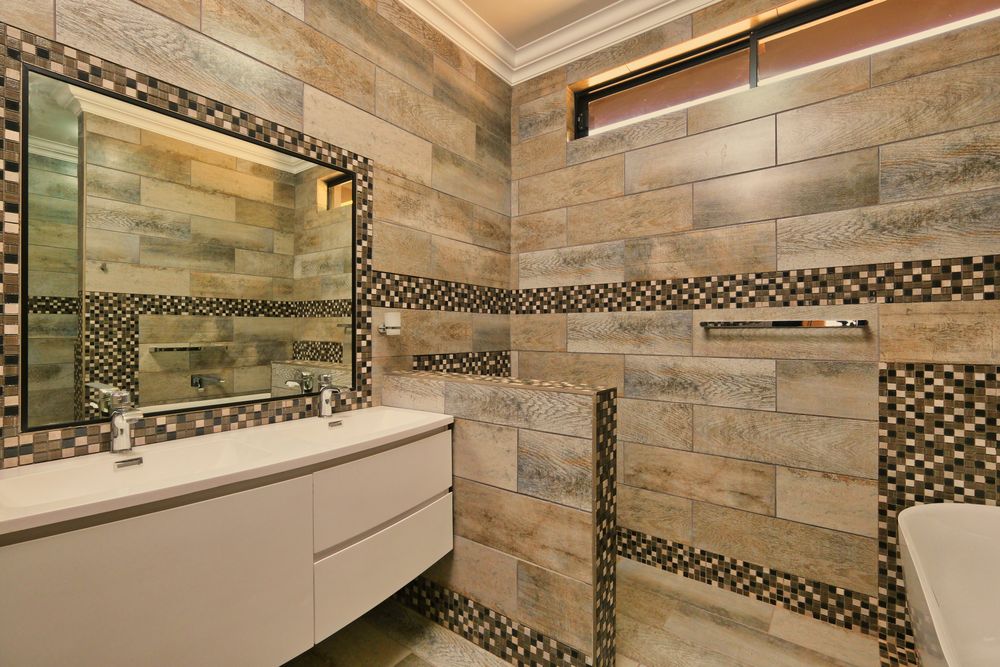
Bathroom Remodeling
Walk-in showers, new tubs, tile and vanities, with the plumbing surprises handled.
Learn more
Flooring
Hardwood, laminate and vinyl plank installed over a properly prepped subfloor.
Learn more
Kitchen Remodeling
New cabinets, counters, lighting and layouts that fit how you actually cook and live.
Learn moreWhere we work
Tile Work across Twin Lakes and 19 towns.
We work about 45 minutes out from Twin Lakes, in southeast Wisconsin and northern Illinois. Tap your town.
Where this information comes from
We checked the details on this page against public sources. Rules and fees change, so confirm anything specific with your local building office or with us.
- Ceramic Tile Education Foundation: What Do You Need to Install Tile in Wet Areas?
- Ceramic Tile Education Foundation: The Ultimate Guide to Underlayment for Tile
- EPA: A Brief Guide to Mold, Moisture and Your Home
- EPA: Protect Your Family from Exposures to Asbestos
- EPA: Learn About Asbestos
- OSHA: Respirable Crystalline Silica in Construction, 29 CFR 1926.1153
- EPA: Renovation, Repair and Painting Program, Contractors
- Iowa State University Extension: Winter Window Condensation

Free estimate
Ready to talk tile?
Tell us what you've got in mind. We'll set up a time to look at it, and you'll get the scope and price in writing, with the design work on us.
- Free written estimates and free designs
- Discounts for military, seniors, teachers, 1st responders and people with disabilities
- Twin Lakes, WI and about 45 minutes around it